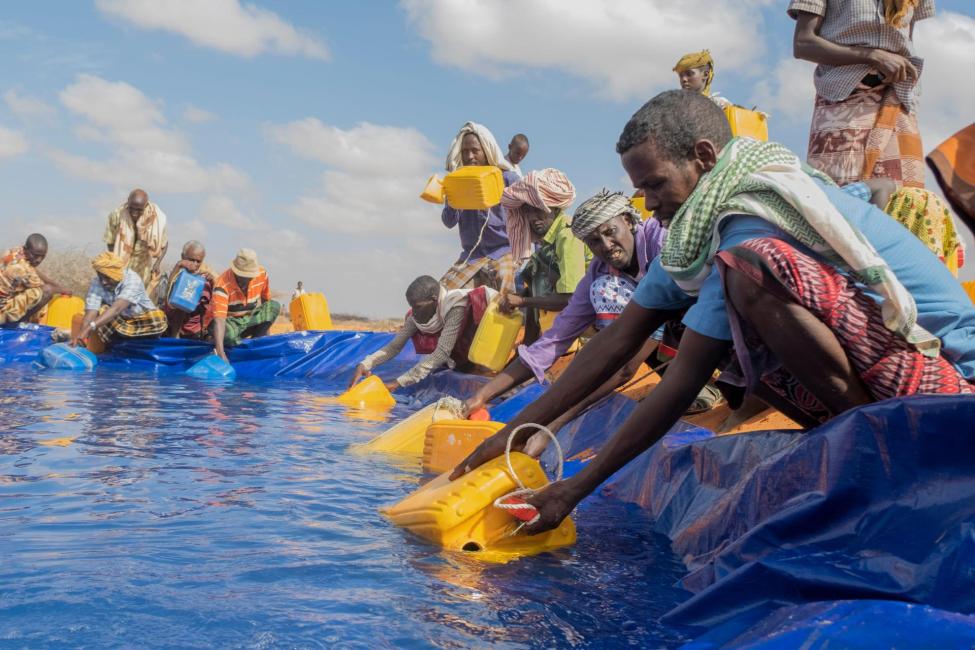
Rising temperatures and shifting rainfall patterns are driving Somalia into a cycle of droughts and floods, posing significant challenges to children’s access to clean water and education. In this fragile environment, the repercussions are profound and multifaceted.
During prolonged droughts, water sources diminish, leaving communities, especially children, grappling with scarcity. In such times, children often bear the burden of traveling long distances to fetch water, sacrificing their education and exposing themselves to risks like exploitation and conflict. Additionally, the scarcity of clean water heightens the vulnerability to waterborne diseases, further compromising children’s health and ability to attend school regularly.

Conversely, when the rains do come, they often arrive with such intensity that they trigger devastating floods. These floods contaminate existing water sources, exacerbating health risks and rendering them unfit for consumption. Furthermore, inundated roads and infrastructure disrupt access to schools, rendering them inaccessible and sometimes even destroyed, disrupting children’s education for prolonged periods.
The cyclical nature of droughts and floods perpetuates a vicious cycle of poverty and deprivation, hindering Somalia’s efforts to provide consistent access to clean water and education for its children. Addressing these challenges requires not only short-term relief efforts but also long-term sustainable solutions, including climate-resilient infrastructure, water management strategies, and educational programs tailored to withstand environmental shocks. Only through concerted efforts can Somalia mitigate the impacts of climate change on its most vulnerable populations and secure a brighter future for its children.

In addition to the immediate challenges posed by alternating droughts and floods, the long-term consequences are equally alarming. As Somalia grapples with the erratic climate patterns, the socio-economic fabric of communities is deeply impacted, with children bearing a disproportionate burden.
Prolonged droughts force families to make difficult choices, often prioritizing survival over education. As resources dwindle and livelihoods are threatened, parents may resort to pulling their children out of school to contribute to household chores or seek alternative sources of income. This interruption in education not only deprives children of valuable learning opportunities but also perpetuates a cycle of poverty, limiting their future prospects and perpetuating intergenerational inequalities.

Furthermore, the environmental degradation resulting from these climate extremes exacerbates existing vulnerabilities, particularly in rural areas where agriculture is the primary source of livelihood. With crops failing and livestock dying due to drought, families are pushed deeper into poverty, making it increasingly challenging to afford essentials like school fees, uniforms, and supplies.
On the other hand, sudden floods bring about a different set of challenges. Apart from damaging infrastructure and displacing communities, they also disrupt the continuity of education. Schools may be used as emergency shelters or suffer structural damage, rendering them unsafe for learning. In such circumstances, children are not only deprived of education but also exposed to heightened risks of exploitation, trafficking, and child labor as families struggle to rebuild their lives.
To break this cycle of vulnerability, concerted efforts are needed at local, national, and international levels. Investments in climate-resilient infrastructure, sustainable water management practices, and community-based adaptation initiatives are crucial. Additionally, prioritizing education and ensuring access to quality schooling, even in the face of environmental challenges, is paramount. By empowering communities and prioritizing the needs of children, Somalia can build resilience and foster sustainable development in the face of a changing climate.